7700 Eldorado Parkway Suite 200 Mckinney, Tx 75072

Your Child’s First Dental Visit: What to Expect and How to Prepare

A child’s first dental visit is an important milestone, but it can also bring questions for parents. When should you schedule the appointment? Will your child need a cleaning? What if they cry or feel nervous?
Knowing what to expect can make the experience easier for both you and your child. At Just for Kids Dentistry in McKinney, TX, the goal is to help children build a comfortable relationship with dental care while giving parents practical guidance for protecting growing smiles.
Whether your baby has just started teething or your toddler is getting ready for a first checkup, a little preparation can help the visit feel less unfamiliar.
When Should Your Child Have Their First Dental Visit?
The American Academy of Pediatric Dentistry recommends establishing a dental home by your child’s first birthday, or within six months of the first tooth appearing. You do not need to wait until your child has a full set of baby teeth or a noticeable dental problem.
An early appointment gives the dentist an opportunity to examine your child’s developing teeth and gums, assess cavity risk, and answer questions about feeding, teething, pacifiers, and home oral care.
Starting early also helps you learn how to care for baby teeth before common problems develop.
Has your child already turned one without seeing a dentist? Don’t worry. Schedule an appointment rather than waiting for the next milestone. Children can benefit from preventive dental care at every stage of development.
What Happens During a Child’s First Dental Appointment?
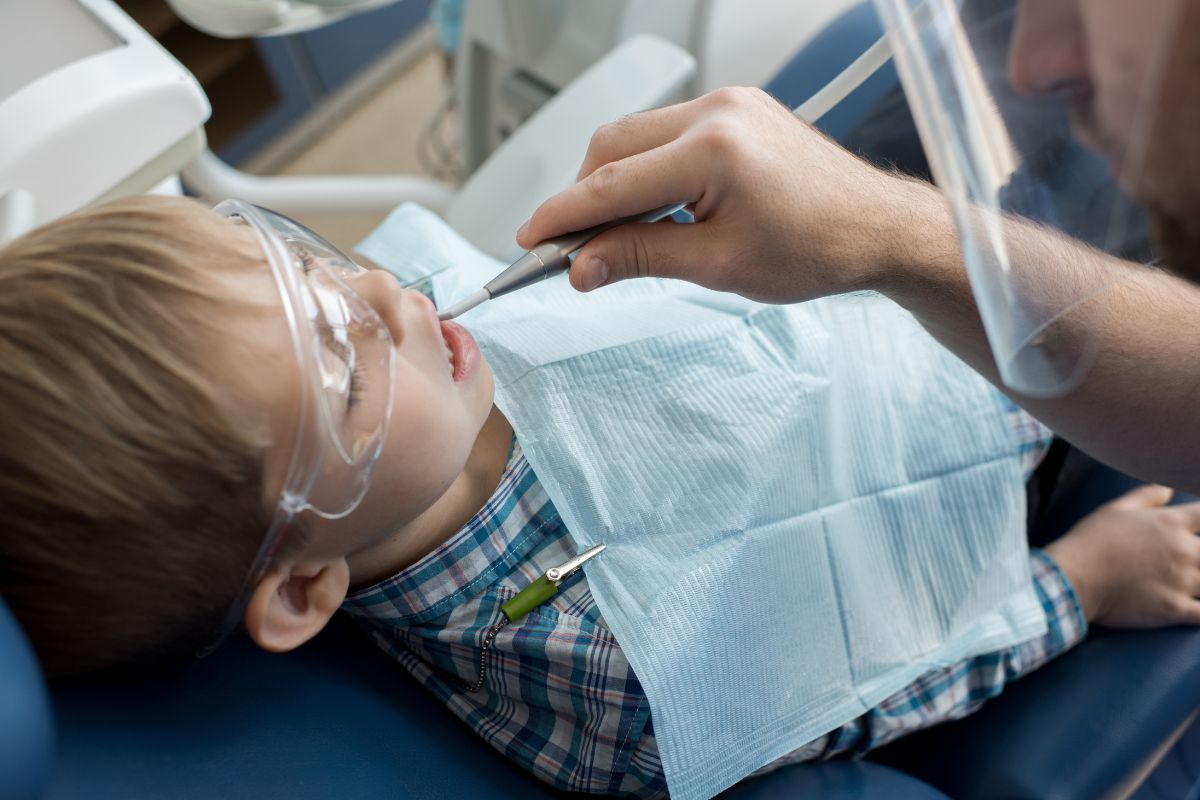
Your child’s first dental visit is usually focused on getting acquainted, checking oral health, and helping you understand how to care for your child’s teeth at home. The exact appointment depends on your child’s age, comfort level, medical history, and dental needs.
1. Reviewing Your Child’s Health History
The dental team may ask about your child’s medical history, medications, allergies, feeding habits, and any concerns you have noticed. Share information about teething, thumb-sucking, pacifier use, or changes in your child’s teeth and gums.
This information helps the dentist make recommendations suited to your child.
2. Examining the Teeth and Gums
The dentist checks the teeth, gums, and mouth for early signs of decay or other concerns. They may also assess jaw development, tooth eruption, and oral habits that could affect dental health.
For babies and toddlers, the examination may be brief and adapted to their comfort level. The team may examine your child while they sit on your lap, depending on their age and the approach used by the practice.
3. Discussing Cleaning and Preventive Care
A professional cleaning may be appropriate, depending on your child’s age and needs. The dentist will determine whether cleaning, fluoride treatment, or other preventive services are recommended.
Not every first visit follows the same sequence. The priority is to assess your child’s oral health and introduce dental care in an age-appropriate way.
4. Learning How to Care for Baby Teeth
You can expect guidance on brushing, fluoride toothpaste, feeding habits, and cavity prevention. The dentist can explain how to clean your child’s teeth, how much toothpaste to use, and when to begin flossing between teeth that touch.
You will also have an opportunity to ask questions and discuss any concerns about your child’s oral development.
How to Prepare Your Child for Their First Dental Visit
A little preparation can make the appointment feel more familiar. Try these simple strategies before visiting a pediatric dentist in McKinney.
Talk About the Dentist in Positive, Simple Terms
Explain that the dentist helps keep teeth healthy. Use words your child understands and answer questions honestly without describing frightening or painful scenarios.
Avoid using dental visits as a threat or punishment. The goal is to make the appointment a normal part of taking care of their body.
Practice at Home Through Play
Pretend to be the dentist for a few minutes. Ask your child to open their mouth while you count their teeth with a toothbrush, then let them take a turn examining a stuffed animal’s smile.
Reading a children’s book about dental visits or watching an age-appropriate video can also help your child become familiar with the idea.
Choose a Convenient Appointment Time
When possible, schedule the visit at a time when your child is usually rested and comfortable. A child who is tired, hungry, or approaching nap time may have a harder time adjusting to a new environment.
Allow enough time to arrive without rushing through check-in.
Bring Helpful Information
Before the appointment, prepare your child’s medical history, medication information, allergy details, and insurance information as needed. Bring any completed patient forms requested by the practice.
Write down your questions so you remember to discuss them with the dentist.
Stay Calm and Offer Reassurance
Children often look to their parents for cues about unfamiliar situations. A calm, encouraging approach can help them feel more secure.
If your child cries, becomes shy, or needs time to adjust, that does not mean the visit has failed. Young children respond differently to new experiences, and the dental team can help determine an appropriate approach.
What If Your Child Is Afraid of the Dentist?
Some children are excited about a first visit, while others need more time to feel comfortable. Fear of unfamiliar sounds, people, or equipment is not unusual.
Let the dental team know beforehand if your child has had a difficult medical experience, has sensory sensitivities, or becomes anxious in new environments. This information can help the team plan a more supportive appointment.
A child-friendly approach may include explaining each step in simple language, introducing instruments gradually, and allowing time for questions or breaks when appropriate.
Try not to compare your child with siblings or other children. Building trust is more important than expecting every child to respond the same way.
If anxiety continues to make dental care difficult, ask the dentist about suitable behavior-guidance options for your child’s age and needs.
How to Care for Your Child’s Teeth Between Visits
Healthy habits begin at home, long before a child can brush independently.
- Brush twice daily. Use a soft-bristled, age-appropriate toothbrush and fluoride toothpaste in the recommended amount.
- Supervise brushing. Young children need help brushing effectively. Continue supervising until your child has the coordination and skills to clean their teeth thoroughly.
- Clean between teeth. Begin flossing when adjacent teeth touch and a toothbrush can no longer clean the spaces effectively.
- Make water the everyday drink of choice. Limit frequent exposure to sugary drinks and avoid putting your baby to bed with a bottle containing anything other than water.
- Keep regular dental appointments. Your dentist can recommend an appropriate recall schedule based on your child’s oral health and cavity risk.
For children younger than three, use a smear of fluoride toothpaste about the size of a grain of rice. For children ages three through six, use no more than a pea-sized amount. An adult should dispense the toothpaste and supervise brushing to limit swallowing.
Schedule Your Child’s First Dental Visit in McKinney, TX
Your child’s first dental appointment is an opportunity to establish healthy habits, check developing teeth, and get answers to your questions as a parent.
At Just for Kids Dentistry in McKinney, TX, the team provides pediatric dental care designed around children’s changing needs, from early visits through the teenage years.
If your child has not yet had a first dental checkup, consider scheduling one now. Early guidance can help you understand your child’s oral health needs and build a practical plan for caring for their smile at home.
Contact Just for Kids Dentistry to ask about new-patient appointments and prepare for your child’s first visit.
Frequently Asked Questions
At what age should a child first visit the dentist?
The American Academy of Pediatric Dentistry recommends a first dental visit by age one or within six months of the first tooth appearing, whichever comes first.
Will my child get a cleaning during the first dental visit?
Possibly. The dentist will determine whether a cleaning is appropriate based on your child’s age, oral health, and cooperation. The first appointment may focus primarily on an examination, prevention, and parent education.
What should I bring to my child’s first dental appointment?
Bring any requested patient forms, insurance information, your child’s medication and allergy details, and a list of questions. Contact the office beforehand to confirm what documentation is needed.
What if my toddler cries during the dental visit?
Crying or being hesitant in an unfamiliar environment is common among young children. Stay calm, offer reassurance, and let the dental team guide the visit. The appointment can be adapted to your child’s comfort and needs.
How often should children visit the dentist after their first appointment?
Many children benefit from dental checkups about every six months, but the right interval depends on their oral health and risk of developing dental problems. Your child’s dentist can recommend a suitable schedule.

Related Articles